Table Of Content

Repetition can be seen in patterns, shapes, and colors used in a design. For instance, repeating a specific pattern throughout a design or using a specific color palette throughout a project creates a sense of unity and harmony. With balance from eye direction the attention that higher visual weights get will be neutralized.
What is the principle of balance in design?
Above, the diagonal lines add a ‘grip’ effect to an otherwise ‘smooth’ rectangle. Have an easy-to-scan visual hierarchy that reflects users’ needs, with commonly used items handily available. Design principles represent the accumulated wisdom of researchers and practitioners in design and related fields. When you apply them, you can predict how users will likely react to your design. “KISS” (“Keep It Simple Stupid”) is an example of a principle where you design for non-experts and therefore minimize any confusion your users may experience. Think of mosaic balance as organized chaos that might look like noise, but actually creates balance thanks to the absence of a distinct focal point.
White space
Negative space in a design, also called white space, is space that has no design elements (other than possibly a background color or subtle pattern or texture). Learn 11 core principles of design and how to apply them to your graphic design work. Penji’s graphic designers understand balance in design, you don’t have to worry about doing it yourself. Watch our demo video here or sign up today to get them started on your designs.
Practical Tips to Achieve Balance in Design
Visual balance doesn’t mean that every element has to be distributed with perfect symmetry. You can think of it like the seesaw you might have played on when you were young, or as a beam balance scale. You can have different weights on each side, but can remain balanced by how the heavier and lighter elements are positioned and stacked. A similar concept applies for your designs because it’s human nature for people to like some type of balance for the stability and structure it provides.
Easiest Online Businesses to Start: Your Ultimate Guide
There is beauty in symmetry but how much of it do you really need? There was a time when perfectly symmetrical designs in architecture were lauded but now you might see several oddly shaped architectural wonders. Even without symmetry, you can make an impact provided you maintain balance.
How to Hire a Logo Designer (5 Different Options)
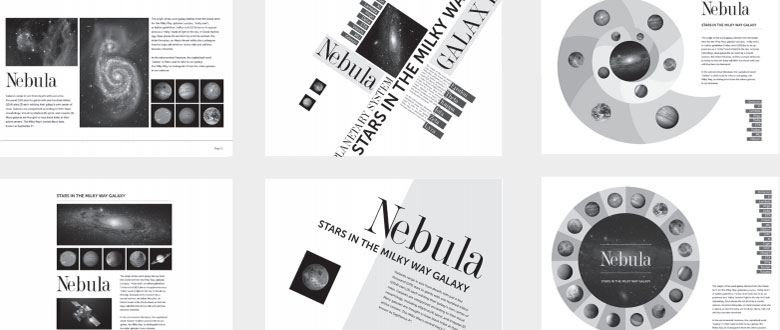
Asymmetrically balanced pages can be more challenging to design - as they don't have elements matched across the centerline of the design. For example, you might have a large element placed very close to the centerline of the design. To balance it asymmetrically, you might have a small element farther away from the centerline.
The Shiny Demos heading in the upper left and the Opera logo in the lower right counterbalance each other and also appear to radiate from the same center as the text links. Opera’s Shiny Demos home page isn’t circular, but the text links all seem to emanate from a common or near common center. It’s easy to imagine the whole shape spinning around one of the squares in the middle or maybe one of the corners where four squares meet. The smaller circle in the upper right adds a little translation symmetry and some asymmetry, increasing visual interest in the composition.
What are the 5 elements of balance in design?
One of the gestalt principles specifically addresses symmetry and order and certainly applies to compositional balance. Throughout this series I’ve tried to point out how many design principles arise from gestalt principles. I also hope that as you’ve followed along you’ve seen how different design principles build on each other. When the reflection is a perfect mirror image, the symmetry is said to be pure.
Learn more about the principles of design
Equal visual weight is given to the various elements that are distributed on the sides of these axes. And they are all symmetrically at the same distance from their corresponding axes as well. If we were to explain this in simpler terms, we’d say that asymmetrical balance is almost like multiple smaller elements on one side, balancing one big element on the other. While this is not actually perfectly balanced, our eyes treats it as if it is.
NSA, U.S. and International Partners Issue Guidance on Securing Technology by Design and D - National Security Agency
NSA, U.S. and International Partners Issue Guidance on Securing Technology by Design and D.
Posted: Thu, 13 Apr 2023 07:00:00 GMT [source]
First, it allows you to make elements stand out from one another. A complete lack of contrast would result in a design that’s simply a single background color with no other visible elements — not exactly a functional design. A design where you can see different elements automatically has some level of contrast. It’s important to familiarize yourself with the most common eye movement patterns, F- and Z-patterns, and the layer cake pattern.
Balanced, symmetrical designs are typically more engaging because our eyes find them naturally more interesting and attractive. Also known as radial symmetry, this technique features all visual elements rotating around a center at any angle. This type of symmetry is ideal for capturing a sense of motion, dynamic action or speed. This is translational symmetry—when visual elements repeat across a location in space.
If you want a graphic design that appears noisy at first, mosaic balance is the option. The app icon designs in iOS 6 and earlier mimic the glossy texture of glass to incite users to tap them. Later, Apple (in)famously introduced a linen fabric texture to much of its user interface.
To have unity in your design, all parts of your composition should be in complete harmony with each other to be visually appealing in the viewer’s eyes. To create visual interest and hold the viewer’s attention longer, you need variety. Variety is the use of several elements of design to make your art “explorable” and give the viewer a better experience. Your ship should be balanced to move forward with ease, and the same goes for the visual elements of your design. To make your composition stable and engaging for your audience, you should create balance for your elements.
To create reflectional symmetry like this, use simple shapes and go for a minimalist logo that doesn’t have many complicated parts to it. Balance measures the visual weight of your composition, which impacts how much each element attracts your audience’s attention. The mass of the page is a large rectangle that’s composed of a grid of smaller rectangular images. On its own, this grid is symmetrical around both the vertical and horizontal axes. On its own, it’s very balanced and looks like it’s not going anywhere.
For instance, you can have several small elements that balance out one large element. Or, you can have smaller elements positioned further away from the center of the composition. In either case, the elements are not the same size and not positioned evenly like with symmetrical balance. However, your composition still has a sense of balance while creating visual interest. An asymmetrical composition is intended to create a deliberate imbalance of the elements in the design.
One of the critical elements in design is balance, which is concerned with achieving a harmonious distribution of weight, color, texture, and space. While asymmetrical balance merely shifts the perspective in an image, off-balanced designs create a feeling of unrest. Ironically, it is this quality that sometimes makes these images hard to ignore. But proceed with caution – if you hit the right mark your design can end up looking amateurish or disorderly. Mosaic balance does not have erratic visual weights as in off-balance designs or a virtually created focal point as in the case of asymmetrical balance. In designs that incorporate radial balance designers will create a center point to draw attention there.




No comments:
Post a Comment